
Name Calling
Wine Travel Beyond the Socials

Sometimes someone calls out your name. Sometimes a place speaks to you. Sometimes it’s a wine that’s doing the calling. This issue, all the calls were answered.
In My Glass


2023 Approachment Traditional Method Meunier
Next week I’ll be attending the 2nd annual Method Oregon tasting featuring traditional method sparkling wines from more than 50 producers, but as a sneak peek, here’s one that is sure to top my list - as wines from Approachment often do. This wine is approachable without lacking complexity, feels good, and develops in an increasingly crave-worthy way as the bottle is poured out. And only 40 cases were produced of this inaugural bottling. So get it fast and get it aplenty. First they had me at their Pinot Gris Ramato. Then at Chardonnay. Then Pinot. Now, they’ve gone and hit me with my favorite Champagne varietal, a healthy tirage, and a price point unheard of for bubbles (let alone most wines) in the Valley these days. You can say they are approaching a full-fledged infatuation. $56
2023 Abbey Road Farm Estate Aligoté
This is a more opulent and textured style of Aligoté, Bourgogne’s “other white wine,” while still showcasing the Willamette Valley’s energetic acidity. A definitively gastronomic wine, this complex expression brings together a scintillating array of fruit aromas and flavors, pastry cream, savory herbs, citrus rind, and a closing note of salinity, all of which leave an extremely generous impression. Cue up a soulful, jazzy playlist and get ready to groove with this dinner-time smash hit. I should note, it also pairs well post-dinner on the porch over cards and a setting sun while the playlist runs on. Chart topper. $35
(Incidentally the Approachment Meunier grapes are sourced from Abbey Road Farm. Abbey Road Farm’s got it going on!)
2025 Tiberio Cerasuolo d’Abruzzo
I have this rule, see a Tavel, order a Tavel. Well, that same rule applies equally here: Cerasuolo d’Abruzzo. A rosé from the Montepulciano grape, these wines are pure treasure to me, and this cherry-colored banger is a precious gem. Medium-bodied with a satiny structure, bright, fresh and richly red fruited with colorful florals interwoven throughout, this wine drives across the finish with savory herbs and cherry Jolly Rancher, lip-smacking goodness. Need I say more? Say less. $35
In the Spotlight
Wine Region of the Week
Last time, we dove into Armenia as a wine region as well as its most recognized appellation, Vayots Dzor. Today, I want to introduce you to another of Armenia’s five wine regions, Aragatsotn, whose name translates to “the foot of Aragats.” Aragatsotn, a diverse and mountainous area, is found in northwest Armenia along the Turkish border.
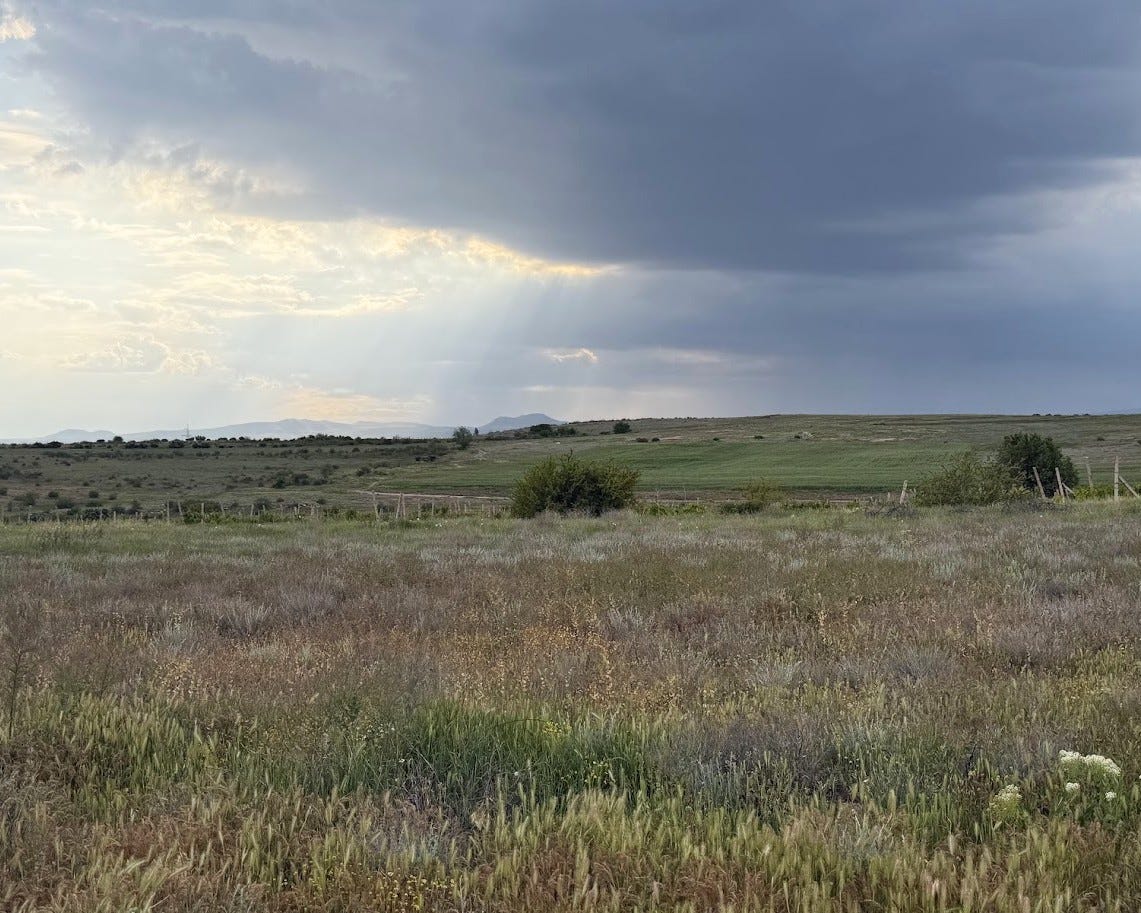
Elevations here begin at 3,120 feet and rise up to 13,400 feet on Mount Aragats, Armenia’s highest peak, with most vines planted between 3,600 and 4,600 feet. The region features numerous lakes and rivers, all of which provide natural irrigation to the land, which is composed of volcanic and rocky soils with deposits of tuff, basalt, perlite, limestone, and pumice. Unsurprisingly, owing to the differing elevations, the weather is widely mixed with cooler summers and cold winters at the higher altitudes, and hot summers with cool winters in the valley areas. Annual precipitation varies widely as well, with an average of 15 inches at the lower altitudes and up to 39 inches in the mountains. There are roughly 3,100 acres of vines planted within Aragatsotn, which is home to around six wineries. The wines are typically derived from indigenous grapes including Voskehat and Kangun for the white wines and Areni Noir, Karmrahyut, and Haghtanak for the reds. Aragatsotn wines are often described as having intense aromatics, freshness, fine tannic structure, and minerality.
Winery of the Week
Sitting within view of northwest Armenia’s three volcanic peaks, Mount Ararat, Mount Aragats, and Mount Ara, is where you’ll find Van Ardi, a family-owned winery established in 2008. After living, working, and raising a family in Los Angeles, California, Varuzhan Mouradian felt a calling to not only return home to Armenia, but to also revive the spirit of Armenian wine. After several years of private study and multiple courses at UC Davis, the family chose a location in Aragatsotn for its soils, climate, 5,000-year history of winemaking, and its position amongst the three iconic peaks. The vineyards, certified organic, are planted on south-southeast facing slopes at 3,450 feet in what the family refers to as soils of fire and stone (aka: rocky volcanic and limestone soil). The vines see ample sunlight and frequent winds, which when combined with the diurnal temperature range, create ideal conditions for balanced ripening of the grapes with little need for chemical intervention.


The Mouradian family’s approach to both viticulture and winemaking is to rely not only on the natural energy of the land, but also of community. They surround their vines and wine with love, music, and passion - including a gentle, low-humming tone which resonates from the estate’s belltower. And not only will you often hear classical, jazz, and Armenian music throughout the vineyards and cellar, but also throughout the estate where the family welcomes visitors to experience not only the wines, but the wines paired alongside dishes prepared onsite by the family. That warm welcome and hospitality are also part of the shared energy the Mouradians believe creates a specific identity in their wines: Armenian wines of passion.
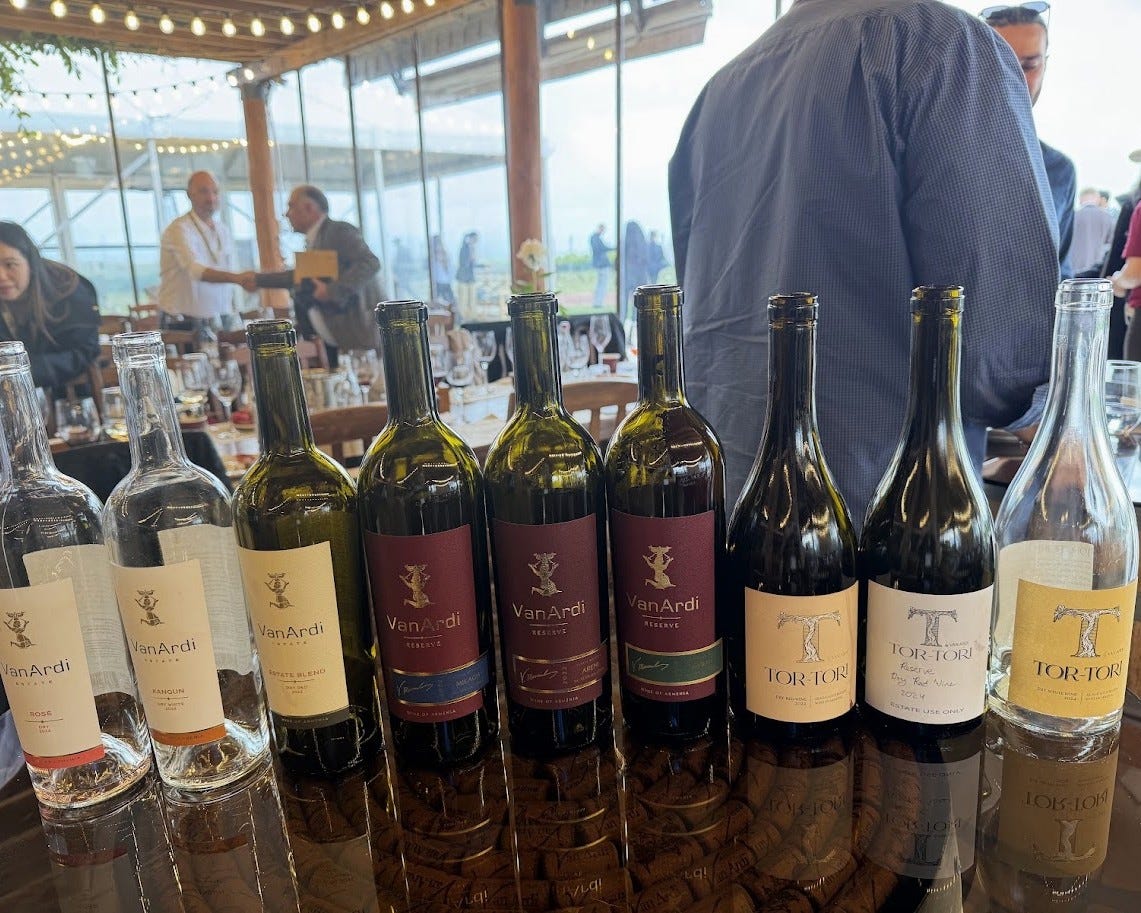
And as for those wines, they work with numerous local grape varieties including Areni Noir, Voskehat, Kangun, Haghtanak, Milagh, and one international grape, Syrah to produce three lines: the classic, the reserve, and the Tor Tori. Van Ardi also offers regular events including tastings, classes, food pairings, movie nights, and brunches, as well as offers overnight accommodations on the serene and expansive property.


My recommendations: For me, Van Ardi was a benchmark producer not only in Aragatsotn, but for red wines from Armenia in general. I found each of the red wines to demonstrate precision, refinement, and to exude balance, character, and an Armenian spirit. I’d recommend any of their reserve label wines from the native grapes, the Van Ardi Estate blend, and the Van Ardi Rosé. My suitcase wines included: the 2022 Van Ardi Reserve Areni and the 2022 Van Ardi Reserve Haghtanak.
Wine Bar of the Week
When I was growing up Cheers was on the one television in the house every Thursday night - at mom and dad’s, at Grandma and Grandpa’s. It was mandatory viewing, at least for the adults. And while I may not have always been captivated or even in the room, I certainly knew enough. It was where “everybody knows your name.” I’ve often joked that our local wine bar has become just such a place; although less for the frequency of our visits and more just because it’s the only wine bar in town. It was bound to happen. But what I did not expect was to have that same experience after only 10 days in a city, let alone a country, I had never once been before. That place: In Vino in Yerevan, Armenia.
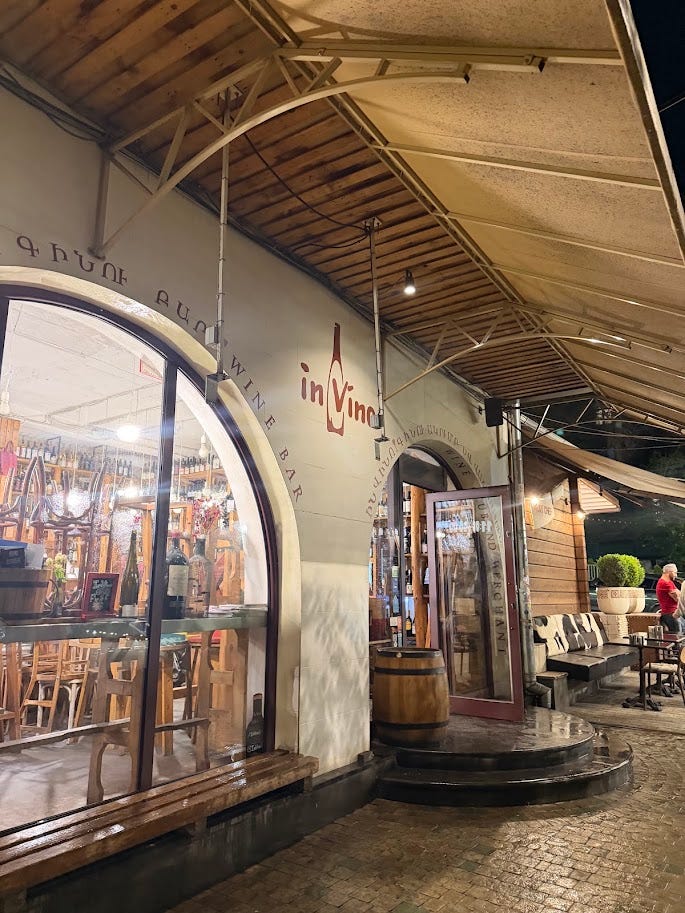
In Vino was the first wine club, merchant, and bar in Armenia, founded in 2012, offering both an extensive collection of Armenian wines, but also from around the world. In fact, you’ll find about 1,000 different wines - largely Armenian. The shop/bar is led by sommelier and co-founder Mariam Saghatelyan and run by a team of wine experts, all versed in Armenian wines as well as regions around the world. They love what they do and they share it passionately. Each bottle of Armenian wine featured in the shop has been blind tasted by Mariam and her team to ensure that it meets their standards of quality. They want to showcase the best Armenia has to offer. And not only that, In Vino’s team makes the time to get to know the winemakers, their stories, and lands because for them wine is about relationships.


And yes, those relationships extend to the guests too. My first night at In Vino, a group of my friends and colleagues met up with a few Armenian winemakers and professionals we had all met earlier in the evening. By the time I arrived with a few more friends, it was nearing closing, but the staff still welcomed us in and allowed us to share the wines already underway while they cleaned and prepared to lock up. Two nights later, we again met up with another winemaker (Alina Mkrtchyan), and were once again there past closing. Now at this point, we had yet to buy anything ourselves despite trying. This was partly because the winemakers insisted it was their turf, so their treat, but also because every time we tried to make to-go purchases out of respect to the staff’s time and hospitality, they had already closed the registers. For my part, I did ensure that the In Vino team was able to sample the wines I had brought from the Willamette Valley, and I eventually did get back to buy several bottles to take home. In fact, I got back a few more times that week, including with the Armenian Vine & Wine Foundation for an Armenian wine class led by Mariam, as well as one final visit just hours before my midnight departure. Although our time was limited, we happened into several of our new Armenian friends, sharing more wines and conversations. My Italian friend and I, knowing we had flights to make, waited until the last possible second before saying our final goodbyes - both to our new friends and In Vino. As the last hugs were made and we stepped across the threshold of the room engaged in our own conversation, we stopped, turned laughing to each other - yes, someone else was calling our names. Cheers!
In the Moment
As I mentioned previously, I was particularly struck by the red wines crafted by the Mouradian family at Van Ardi. It was only the fourth Armenian winery I had visited up to that point of the 10-day trip, but I had also already tasted dozens of wines from across the country (including several at In Vino!). In other words, I had experienced enough to know that these wines stood out in the crowd. They were high-quality, precise, and balanced across the entire range of reds - certainly representative of not only the place, but of expert, modern winemaking. I had a brief moment with 2nd gen Ani Mouradian to talk about what it is that sets these red wines apart to her.
In Depth
If Areni Noir is the King of Armenian grapes, Voskehat is the Queen. Translating to “golden seed,” Voskehat is an ancient white grape variety native to the Caucasus region with references, including charred grape seeds found alongside ancient amphorae, dating back 3,000 years. Voskehat features thick skins and is well-suited to the diurnal temperature swings found throughout Armenia. A late-ripening variety, it requires plenty of sun, water, and can be incredibly vulnerable to powdery mildew, which can easily invade the densely packed clusters. Voskehat wine is commonly described as medium- to full-bodied with a moderate level of acidity. Floral aromas such as lemon verbena, jasmine, citrus blossom, and a multitude of white flowers are common descriptors. In cool vintages, orchard and stone fruits are common on the palate, while in warmer vintages, tropical fruits like pineapple and mango are often noted. Voskehat is commonly produced as a single-varietal white wine, or used in a white wine blend, but it has also been used for sweet fortified wines as well as sparkling wines in Armenia. Voskehat pairs well with Armenian cuisine, complementing dishes such as fresh herbs and vegetables, seasonal fruits, dolma, khorovats (barbecued meat), and lavash (traditional flatbread). It’s also well-suited to seafood, poultry, pork, and various Mediterranean-inspired dishes.
In Context
A few weeks ago I concluded my third year judging for the Concours Mondial de Bruxelles Red & White Session in Yerevan, Armenia. For new readers, I want to share the behind the scenes process of how this competition works, which is also why it works. For those of you that have been around, read on for a refresher, or skip to my impressions of this year’s competition, In the Room Where It Happened.


The Concours Mondial de Bruxelles (CMB) is an international wine competition, founded in 1994 by the publisher of the Belgian publication Revue Belge des Vins, Louis Havaux. As a judge representing the U.S. coalition for the 2026 session, I was one of 320 certified global wine experts/tasters blindly assessing among 6,700 wines from 51 countries worldwide.
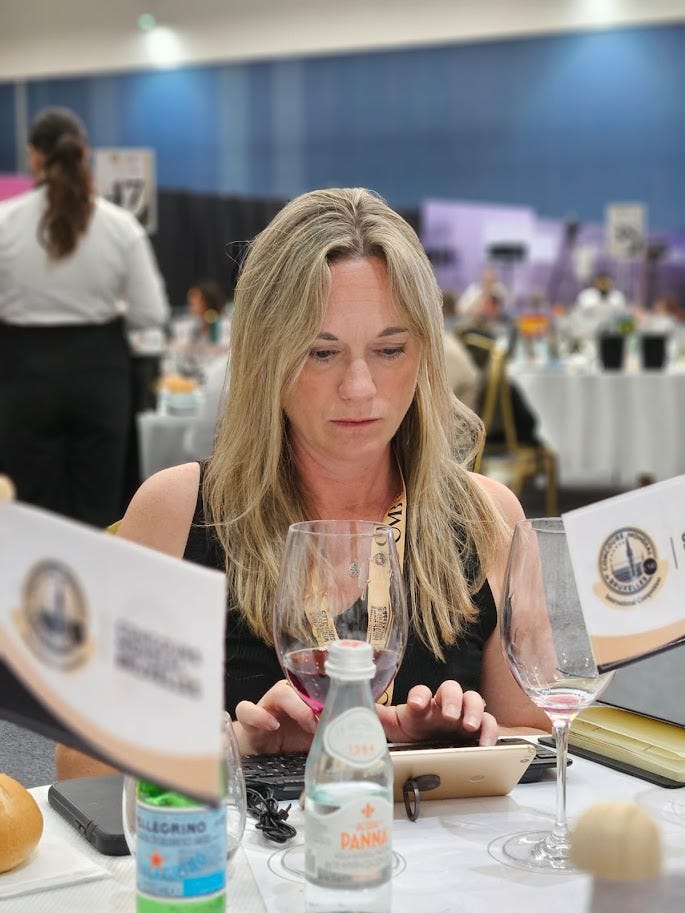
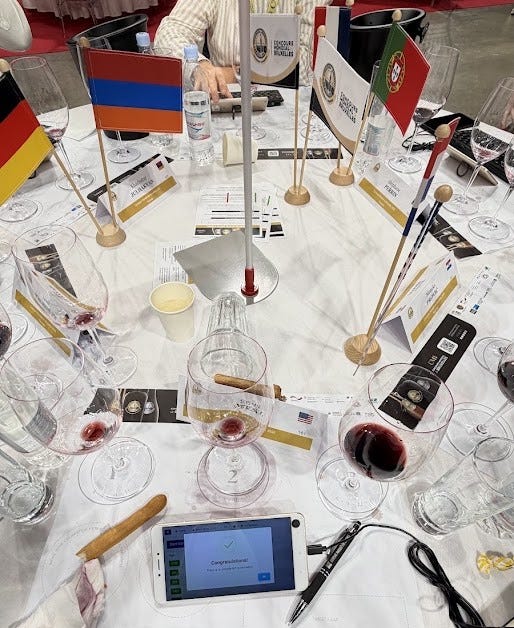
The CMB session takes place over three consecutive days of blind tasting. Five judges are seated at each numbered table, and in most cases represent five different countries. (This year 56 nationalities were represented overall.) A table captain is pre-selected by the Concours Mondial and seated at the head of the table. It is the captain’s job to assist new judges, ensure the wines are in correct order, not faulty, that the review process keeps pace, request second bottles if necessary, and to submit the table’s collective scores.
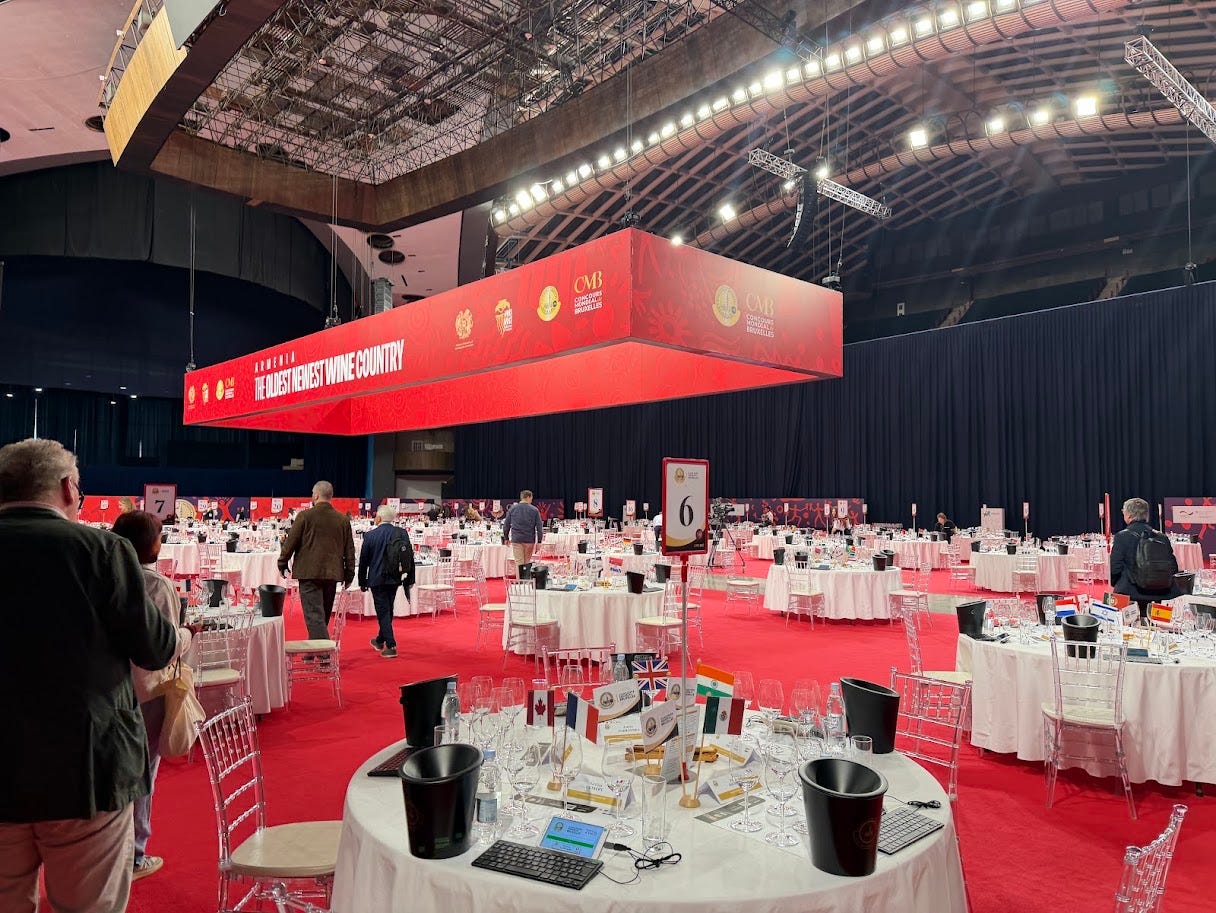
Each table is responsible for assessing between 35-40 wines per day in a roughly three-hour time span, which means there’s time to spend roughly five minutes or less per wine and typically take one bathroom/coffee break per morning. The wines are poured in flights beginning with the whites. The variety and region are unknown. The only information presented is the vintage and level of sweetness if necessary. The professional assessment, completed on a touch-screen device, includes a numeric scale for sight, smell, taste, and overall quality with multiple sub-categories within each for intensity, condition, quality, and persistence. For reference, the scale adds up to 100 points, with most wines falling somewhere between 75-100. Additionally, each judge is asked to record professional tasting notes via keyboard prior to submitting the results for review by the table captain who then submits the results before the panel moves onto the next wine.
At the conclusion of each day, the scores and tasting notes are printed for each individual taster along with the wine reveal. It’s both fun and interesting to see if you guessed the regions/wines correctly, there are often many surprises. The sheets also indicate how you fared with the repeat wine, of which there is typically one per day. This system is part of ensuring the accuracy and consistency of the results. The final stage of the process happens after the competition has ended and is where technology really takes over. The scores are analyzed, assessed, and tabulated by an independent agency for not only the awarding of the coveted medals, but also to create marketing and communications resources for the producers, including AI-generated wine profiles from the judges’ technically and qualitatively derived assessments. Additionally, the CMB will continue to promote the awarded wines, through social and traditional media, but also at dedicated wine experiences in airports, markets, and events around the world.
Anything that promotes wine around the world and introduces us to new varieties, regions, wines, and stories, is of immeasurable value in my book - and it was again an honor to participate.
In the Room Where It Happened
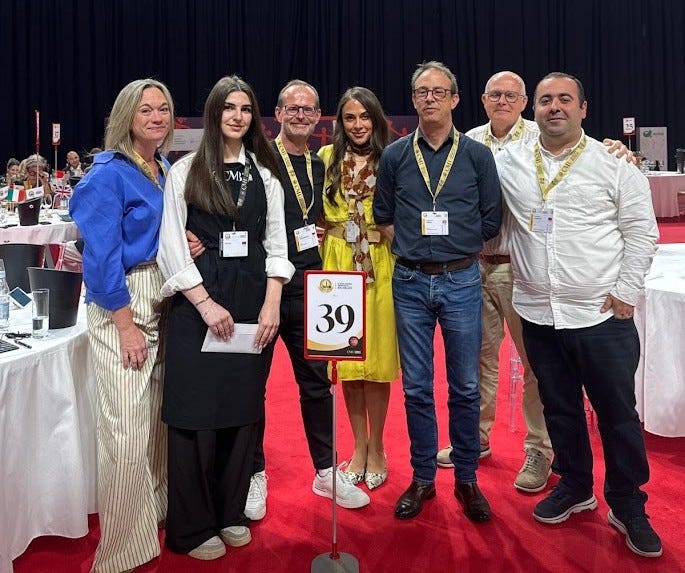
This year’s competition was one of the most intense yet. Not only was my table captained by a Master of Wine (of which there are only 422 in the world), but we also had 118 wines from 10 different countries. While that’s not the most wines I’ve tasted at this competition, it is the most diverse set I’ve experienced. And did I mention my captain was a Master of Wine? Now, I’m not one to get hung up on titles. We all come to these tables with a high level of experience, and each one of us still has so much to learn. Wine is a never-ending rabbit hole. That said, MWs are considered the elite of the field and I will admit I was initially nervous to see how my scores and tasting notes would stack up to someone with that level of training and decades of experience. We did have our disagreements - particularly around wines whose styles were distinctively more rustic - but for the most part we lined up, and after a few rounds of tasting, those initial nerves dissipated. And, as always, with a panel of tasters - in this case, representing five nationalities and five different professional backgrounds - we all ultimately learn something from each other.
As for those 118 wines, this year my table tasted wines from Portugal, France, Spain, Armenia, China, Italy, Bulgaria, South Africa, New Zealand, and Mexico, and based on my post-session tasting notes, Bordeaux, France; Alentejo, Portugal; Rioja, Spain; and Xinjiang, China collectively and on average, received my highest ratings. Anecdotally, I found it interesting to note that France, China, Portugal, and Spain are all repeat top performers (in my personal rankings) - sometimes for the same region, but not always. Italy and Germany have also each found a top spot. And interestingly, various regions within China have also received my lowest average ratings each year, with an Italian region joining for a low average rating this year. Now of course this is not scientific by any means, there is no control factor, and it’s always an apples and oranges scenario (different vintages, grapes, blends, wineries, etc.), but I still find it interesting to see how my ratings compare. And based on my rudimentary and unscientific observations of the regions I’ve seen in multiple years, Bordeaux and Rioja have remained consistent and among my highest rated on average; Xinjiang, China has shown the most consistent improvement (year over year for three years) while Ningxia has consistently ranked on the lower end, and Piemonte, Italy has the greatest variation. As for the wines I personally rated the highest, Bordeaux came in top in 2024 and 2026, while 2025 saw a three-way tie between Douro, Portugal; Sicily, Italy; and Ningxia, China.
Now, what do I take away from all of that? Bordeaux and Rioja wines are consistent. And typically of top quality. I’d also say, Portugal is a place to watch - or better yet, start exploring more often by the glass. It’s definitely getting exciting. And China remains interesting, with some serious bright spots, but it is still coming into its own in my opinion. Lastly, I am also personally excited about white wines from Moldova, Spain (Rueda, Navarra, and Aragón), Tuscany, and Alentejo, Portugal. For reds, Areni from Armenia showed quite well, and Bulgaria definitely had me taking notice (rustic reds, yes, please!). In other words, it’s an incredible time to travel the world by the glass.
In My Opinion
I’ve said it before, I believe the Concours Mondial de Bruxelles competition is one of the most fastidious in the world with an unmatched level of professionalism, integrity, and verifiable accuracy. The analysis is rigorous and is conducted by carefully chosen experts from a variety of backgrounds, careers, ages, cultures, and markets, which translates into a well-rounded perspective. Not homogeneous reviews. The resulting cross-section of perspectives is genuinely rare and valuable for both the consumer and participating winery.
But what I haven’t written about are the reasons I also personally value this competition, a few of which stand in direct opposition to the critiques of some outspoken critics. First, I love that the majority of the wines submitted are average, consumer wines. They are not, and never claim to be, the world’s best wines. In other words, these are wines which many people will have access to and that will be found at approachable price points. The majority of the wines rated are not collector-level, special occasion wines. They are every day drinking wines. And let’s face it, there are a lot of those on the market, so seeing a CMB award on a label, can be a helpful starting point in making a selection - particularly if it’s from an emerging wine region with which people may not be familiar. Will it guarantee you’ll love the bottle? No. That’s always going to come down to personal taste. But what it does say, is that you can trust the wine is well-made and true to its style - and that it wasn’t just awarded a medal for participation. The CMB doesn’t hand out accolades willy-nilly. Less than 1% of wines receive Grand Gold, +/- 14% receive Gold, and +/- 15% receive Silver.
Not every wine made is going to rise to the level of international stardom, but those that do are certainly enjoyed by fewer people than the majority of most wines made. And every bottle of wine - regardless of status, cost, or access - is the hard work and passion of many individuals over the course of months and years. Each wine is meaningful and worthy of honest assessment and recommendation. And that’s why I appreciate the premise of the CMB and find it worthy to sit as a juror - because while I will relish in (and recommend) those occasional spectacular or unicorn bottles, I’m also going to crack open far more “any day wines” in this lifetime, and happily so!
(Speaking of, here are a few examples of my highly-rated wines from the 2026 session: 2022 Chateau d’Anvichar, Bordeaux ≈ 20€; 2024 Rowan’s Ridge Sauvignon Blanc, Western Cape, South Africa ≈ $15; 2025 El Lledoner, Aragon, Spain ≈ $20)
Lastly, I also appreciate and value the cultural context the CMB provides its tasters. While primarily and most significantly this is a three-day global wine competition, the experience is also layered with rich cultural adventures and immersion in the host city, featuring an array of local delicacies, traditions, and extensive amounts of wine education. Wine is not a simple beverage that exists within a vacuum. It’s inherently cultural - multi-cultural. And it is impossible to appreciate the vast, beautiful, complicated, challenging nuances that define each culture’s differences (and similarities) from a textbook or marketing brochure.


We all learn by experience, through our senses, and most importantly, from each other - and that includes from the 55 other nationalities represented on the jury. Wine trends, pairings, language, descriptors, and experiences are wildly diverse. And not only does being surrounded by other cultures, in new cultures, lend to our perspective and lens as wine critics, it also helps us to teach, share, and yes, ultimately sell wines more authentically. The CMB understands that. And they understand the ultimate mission: get wine in the hands of an increasing number of wine loving people by helping to promote emerging wine regions, advance cultural exploration and exposure, and educate through wine, food, art, music, and economies. I know it has made me a better taster, writer, critic, teacher, student, and ultimately a better human being - with wine at the center of it all (and often in my glass).


In the News
Results are in! Last month, the Concours Mondial de Bruxelles announced the winning wines of the 2026 Red & White Session held in Yerevan, Armenia:
The International Red Wine Revelation 2026 - Jammertal Wine Estate’s 2018 “Koh-I-Noor” Merlot from Villány, Hungary - a second International Red Wine Revelation for the winery.
The International White Wine Revelation 2026 - Vinăria Ialoveni’s 1994 Vin Pelicular Ialoveni Armonios Reserva from Codru, Moldova. (Yes! 1994.)
Of the 6,700 wines submitted from 51 countries, France led the rankings for Grand Gold Medals with 24, the majority of which went to Bordeaux wines. Portugal followed closely behind with 23 Grand Golds, four of which were earned by the producer Quinta Da Lapa. Italy came in with 13 Grand Golds, with Spain close behind at 12. Germany, Moldova, and South Africa also saw a high success rate for medals overall.
The full list of awarded wines from the 2026 Concours Mondial de Bruxelles Red & White Session can be viewed here.
In Good Conscience
Last year, after reviewing a non-alcoholic wine once a week for Dry January, I promised to continue to share those worth mentioning. They’ve been few and far between. In general, non-alcoholic wines/drinks are not my thing. That said, I see their value and like any wine or experience, I’m also dedicated to trying things more than once and keeping an open mind. Still, for the NAs to make their way into my life, I need them to not only be drinkable, but also good. Recently, I’ve come across a few new labels. So, whether you’re looking to zebra stripe*, want a night (or weeks) off alcohol, are looking to blend in socially without partaking, or are just curious, here are a few of the NA bevs that have made it past my scrutiny.
First up, two Chardonnay-based no and low alcohol options from Argentina’s Domaine EdeM, the Catena family’s premium no- and low-alcohol label developed by the Catena Institute of Wine.


Blonde (0.0% abv) — a sparkling non-alcoholic Chardonnay-based wine crafted from early-harvest Chardonnay verjus** and Chardonnay grape must, infused with select natural botanicals. After first pouring this wine and taking an initial sip, I looked around the kitchen to see what my husband was cooking. I thought for sure he had just used some cloves. It turns out, it was the wine’s intense aromatics - cloves, cinnamon, and anise. It smelled just like my grandma’s spice cookies. And it tasted like them too. My daughter’s friend said it smells “like when you walk into one of those Christmas shops.” In other words, it definitely does not smell or taste like wine. That said, I did enjoy it and have since enjoyed a few glasses (just to be sure). While this isn’t something I’d personally reach for often, I would consider keeping this around at the holidays. It would make a great glass to have while wrapping presents, baking cookies, or watching endless Hallmark Christmas movies - a tasty way to cut down on over-consumption at the holidays (possibly eliminating the need for Dry January). I also like how it felt. It didn’t lack texture or body, but instead carried a creamy and lively sensation across a spicy, lingering finish. So yeah, this one makes the Christmas List.
Uco Stones (7% abv) — a low-alcohol sparkling Chardonnay where fermentation was intentionally stopped early to preserve natural acidity and freshness, before blending with Chardonnay verjus. Compared to the others, there is no mistaking this one as anything other than wine. It has a clean, crisp nose with florals, citrus, a hint of brioche, and a clean mineral finish. It reminded me of the tiny little bottles of Asti I used to keep around before I really got into sparkling wine - just a way better quality. On the palate it was citrusy, creamy, and just kinda delightful. It would easily make for a nice low-alc sub-in at a Sunday family brunch or afternoon at the park when you still need to be productive later in the day. Relief player.


MaraBela Wild Verbena Sparkling Tea (0.0% abv) — a sparkling tea crafted in Walla Walla, Washington and founded by siblings Ana and Jesús Martínez Bujanda, the fifth generation of the Valdemar Family, whose wineries include Bodegas Valdemar in Rioja, Spain and Valdemar Estates in Walla Walla. MaraBela is made with organic teas and botanicals, including Sencha and Chun Mei green teas, white peony tea, lemon verbena, and a touch of lavender. Hallelujah! A non-alc that doesn’t taste like kombucha. It doesn’t taste like wine either, but in this case it’s not wine. It’s tea. Bubbly, sparkly, tea. The MaraBela makes a dramatic Met gala-like entrance on the palate that leads with shock and leaves with awe. It’s very floral with notes of lemon grass, white peach, peony, and lavender. It’s buoyant, crisp, refreshing and a fizzy way to take your afternoon tea - or evening aperitivo with some light apps. Anne Hathaway. (And yes - some non-alc sparkling teas do have caffeine.)
Serena Mode 0.0 (0.0%) - from the Miguel Torres family of wines in Chile, this is a de-alcoholized rosé of Cinsault with 36g/L of residual sugar. While I prefer the Serena Mode 0.0 Sauvignon Blanc I’ve previously reviewed, this non-alc is truly made for a rosé all day lifestyle. It’s easily the most impressive non-alc wine in terms of aromatics. It smells like wine! Strawberries, pomegranate, melon, and a hint of citrus. On the palate, however, it’s definitely less wine-like. The aromas carry over as flavors, but it’s lacking the zip and zing I expect from a rosé. That said, with some summertime BBQ fare, this is a solid option for when you’re craving a pink drink without the buzz. Rosésque.
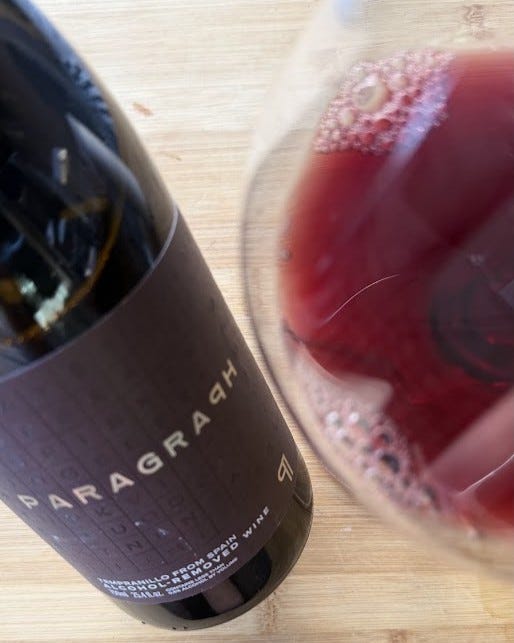
Paragraph Tempranillo (< 0.5% abv) - a new alcohol-removed wine created by an American wine enthusiast and the former winemaker of Giesen No-Alcohol Wines in conjunction with Familia Muga of Rioja. This debut release is a Spanish Tempranillo sourced from high-altitude (2,300 feet) Castilla vineyards with vines aged between 30 to 50 years. The starting point for this wine is high-quality finished Tempranillo aged in French oak barrels for two to four years. The alcohol is delicately removed using low-temperature vacuum distillation followed by aroma recovery technology***. The wine then rests in bottle for two months prior to release. My take: this is the most wine-like non-alc I’ve experienced. It had all the varietal character of Tempranillo in both aroma and flavor - not a top-quality example - but correct. It did, however, still lack body and structure as well as soul if I were to compare it to wine. That said, I drank a glass. And poured a bit more for dinner because this one is best served with food - savory food that will enhance the wine’s umami character and lift the dark berry and dried herb notes. Am I 100% sold? No. But I’m close. Of the still red, de-alcoholized wines I’ve tried, this gets an affirmative nod from me. Quasi-wine.
*Zebra striping is the term for an alcohol moderating practice whereby alcoholic and non-alcoholic drinks are alternated one-for-one during the course of a longer occasion.
**Verjus (pronounced vare-ZHOO) is a highly acidic, unfermented juice made by pressing unripe wine grapes. Meaning "green juice" in French, it offers a brighter, more subtle tartness than vinegar or lemon juice. It’s often used in dressings, marinades, deglazing pans, and non-alcoholic cocktails - or in this case NOLO wines.
*** Aroma recovery technology captures and isolates volatile flavor compounds during de-alcoholization. The system gently boils off and condenses aromas at low temperatures before alcohol is removed, later blending these captured aromatics back into the wine.
Side note: You still need to vacuum seal non-alcoholic wines and store them in the refrigerator to prevent oxidation if you plan to store any leftovers over a few days or a week. And for the sparklers, you’ll want to use a sparkling wine stopper to preserve the bubbles too.
In the Know
By definition, wine is fermented grape juice. And as we know, the fermentation process is one in which yeast convert the sugars in the grape juice to alcohol and carbon dioxide. So what makes a non-alcoholic wine, well, wine and not just grape juice? To be a truly de-alcoholized wine, the process begins with fermented grape juice - aka wine. At this point one of three processes is typical for de-alcoholization: vacuum distillation, reverse osmosis, or spinning cone column technology. In vacuum distillation, the wine goes into a strong vacuum where the alcohol is gently boiled off at temperatures between 70 and 95 degrees Fahrenheit. The vacuum seal allows the wine to boil at lower temperatures, which prevents the wine from cooking and helps to preserve the aromas and flavors of the wine. In reverse osmosis, the wine is forced through a filtration membrane at high pressure. This process separates the liquid into two parts, one a water and alcohol combination, and the other a very concentrated alcohol-free wine. The alcohol and water is then heated to remove the alcohol, and the remaining water is returned to the alcohol-free, concentrated wine. Spinning cone technology is a vertical stainless-steel cylinder composed of alternating rotating cones that spread the wine out into a thin film, allowing rapid removal of the alcohol. This technique is often used for premium full de-alcoholization and is known for excellent aroma retention.
It’s also not unusual for a portion of grape juice, sugar, or water to be added to the final NA wine to help balance the aromas and flavors, because regardless of the process used to create the non-alcoholic wine, making it taste like wine is difficult. Removing the alcohol isn’t the challenging part - although it can be expensive. The real challenge is creating the aroma, mouthfeel and body of a wine, once the ethanol-based alcohol is removed. Ethanol itself doesn’t impart flavor into the wine, but it does lend to the overall weight, texture, and mouthfeel. The more alcohol, the weightier the wine typically feels, making for the roundness and body we associate with the beverage. Therefore, the trick to de-alcoholized wine is in recreating the aromas, mouthfeel, and structure of the wine without the addition of too many sugars or additives.
In the Hopper
Italy, because always, but specifically Campania and Montefalco. Livermore, more Armenia, Spanish wine studies, wine reviews, local highlights, and several more interviews to come. I’ll also be attending the traditional method sparkling wine celebration, Method Oregon this weekend. The second edition of this annual event has expanded from a one-day tasting featuring 20 producers, to a multi-day series of tastings, education, and parties featuring 50+ producers. I’ve been a strong advocate for Oregon as a sparkling wine destination - I think it can be the leader of the category nationally. That said, I’m not without my criticisms and opinions, of which I’m likely to have more soon! And then, I’m going to embark on a very interesting and unique adventure, which I’ll highlight here before any social platform. Stay tuned!
As always, so much information and education - love the CBM for you and it was a good refresher of what they are about.
Thanks for the addition of alcohol removed wines! I need to look for your other post. Unfortunately for the next few months I need to lay off the alcohol so am trying to find a few things I can drink but still feel like I'm part of the crowd! So far Phony Negroni is the only thing I have found that is close to having a cocktail, and the wines I have tried hit pretty flat.