

Despite having accidentally set a grease fire on my kitchen stove in my newlywed year (which was put out immediately, but not in time to prevent the sprinklers from being triggered and flooding our entire apartment - as well as the one below…renter’s insurance was a lifesaver), fire was not something I regularly thought about. Of course, in school we were taught to stop, drop, and roll. And growing up in Chicago, we learned about the Great Chicago fire, but the Midwest is generally not prone to wildfire. Then we moved west. Now, I wasn’t in Willamette Valley during their catastrophic fires of 2020, but it certainly remains part of the conversation - in cellars and tasting rooms alike. And this year, given the drier than normal winter and raging fires across Oregon (and Washington), it was again top of mind for most.
Then, two things occurred that sparked a real interest in the topic. No pun intended. First, I received an invitation to attend a wildfire prevention field day at a ranch in Colorado. Admittedly, I like Colorado and thought at best this could be interesting and at worst, I’d get a day or two in the mountains. But ultimately, I didn’t really consider pursuing the opportunity - until a Saturday in June a few weeks later. The weather was unseasonably cool for a Saturday in June and my family and I thought it would be a good day for a long hike. And since it’s usually way too hot in the Columbia Gorge to hike mid-summer, we figured this would be our one opportunity to get out there. We chose a familiar hike, the Lyle Cherry Orchard and Discovery Loop Trail in Lyle, Washington. When we arrived, the temperature was somewhere in the upper 60s to lower 70s, with ripping winds. Sustained winds were probably somewhere between 20 to 30 mph, with gusts certainly up to, if not over, 50 mph. High? Yes, but not uncommon. The area is known for its wind and kite-surfing for a reason.
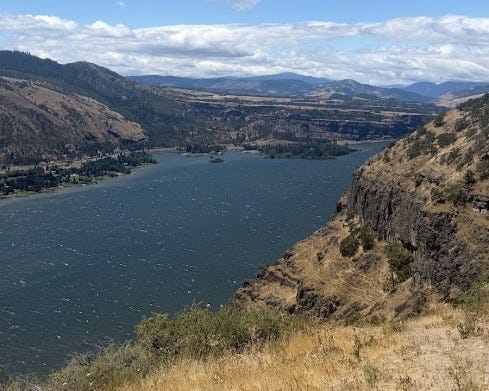
The hike, which includes a 1,225-foot elevation gain, is considered moderate. We were taking our time, enjoying the bluff side views of the Gorge. At one point, I wondered if we would see any damage from any of the previous year’s Gorge fires, but was soon lost to the views and conversations. We originally planned to only hike the Cherry Orchard, but as we completed the orchard and came to the crossroad of the Discovery Loop, we decided to continue our adventure into uncharted territory - at least uncharted by us, and clearly many others because the trail was quite overgrown. We walked probably a mile-and-a-half to two miles into the woods, which would have ultimately led us back to another point on our original trail and back to the car, at which point I thought I smelled smoke. Now, my husband will tell you I have a sonic nose, but no one else smelled anything. We were near-ish to town, so I thought maybe someone was BBQing, so we hiked on and into a clearing that was rising around a corner. I figured there would be another spectacular view as we crested the hill, so I had my camera rolling…
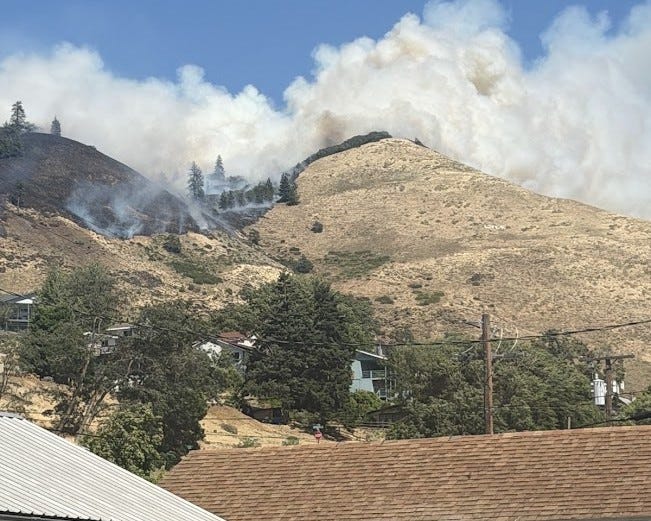
This was at 2:10 p.m. After the camera stopped rolling, we stood there in awe for a few minutes. My husband was looking for information online, thinking it might be a controlled burn. I looked upwards, saw the increasing amount of smoke, the trees blowing, and realized this was not intentional. I turned to my family and said, “Get the fuck out, now! Go!” because while I may not be a fire expert, I do know fanning the flames is a bad idea. And so we began a trail run back to the car as fast as possible, warning other hikers along the way, as sirens and helicopters filled the air. We were not all the way down by the time the first responder planes had arrived and had a few glimpses of their work from atop the bluff. Needless to say, we picked up our pace - taking notes of possible off-trail escape routes if necessary. Fortunately, we made it to the car, along with everyone else that had been out on the trails. We drove back into town, where I came to a stop in the middle of the road as I saw this…
That was at 3:45 p.m. The very area we had first spotted the fire was up in flames. You know that expression, “made me weak in the knees”? Yep. I had to squat down and literally ground myself in that moment. We later came to learn the fire likely started between 1:30 and 1:45 p.m. The cause remains unknown, but the police suspected it was manmade. The Lyle Hill Fire went on for days, burning a total of 233 acres before it was contained. There was thankfully no loss of life or property, but the trails are no longer open - or even in existence. I’ve since driven past the bluffs, and it is astonishing to see the lush, green place we sat together overlooking the river completely scorched to the ground.
And yes, that week, I accepted the opportunity to attend the wildfire prevention field day. But before we get into that, here are a few wines to (safely) fire up your week.
In My Glass


2023 Tenuta Tascante Carricante “Buonora” Etna Bianco DOC
Heads-up! Way up. This white wine from Sicily’s Etna region is currently sitting in my top five for white wines this year. This wine is a standout. A gem. And one of the best white wines I’ve had randomly in a while - particularly at this price. It’s intensely aromatic. I seriously brought this glass to my nose an obscene amount of times. It’s also insatiably delicious - stone fruits, minerals, that volcanic ash, and a salinity and freshness that made everything at the table sing (except for me - for which everyone should be thankful). Ambrosial. $27
Bordeaux but youthful and fresh? Yes, please. It’s not just the big Spanish and Italian regions taking a turn toward more approachable reds, one of France’s top dogs is getting in on the game too. This right-banker from Saint-Émilion gives classic Bordeaux all day long, but with a juicy, silky soft feel. I’ll be honest, I didn’t have the highest of hopes going in, but coming out I’m drinking this with a side of metaphorical crow and anything hot off the grill. It’s damn cheeky, tasty, and a downright dinnertime drinker. No need to decant, age, or aerate. Just pour the glass. In fact, pour two. Bank on it. $28
2022 Milsetentayseis (1076) La Peña
Both from and drunk at 1,076 meters, La Peña rosado comes from mineral-rich red clay soils and a single high-elevation vineyard in Ribera del Duero. Yes, the vineyard that resuscitated me - Milsetentayseis - itself a tangible energy that this wine brought back in a torrent of sensations. The blend for this small-production wine leans heavily on Bobal (50%) and is rounded out with six white wine varieties all grown within that single plot at 1,076 meters: Albillo mayor, Viura, Alarige, Clairette, Salvador, and Pardillo. It’s fruity, exceptionally complex, fresh, and undeniably memorable. It’s not overly polished or precise to the point it feels manufactured, but instead has this natural, radiant beauty and an elegance all its own. It also just unseated my favorite rosé of all time - a spot held by only one wine for the last seven years. Au naturel. (or, more appropriately, al natural) $84 (for the 2023)
2023 Merjanian Vineyards Dzon Old Vines Areni Noir
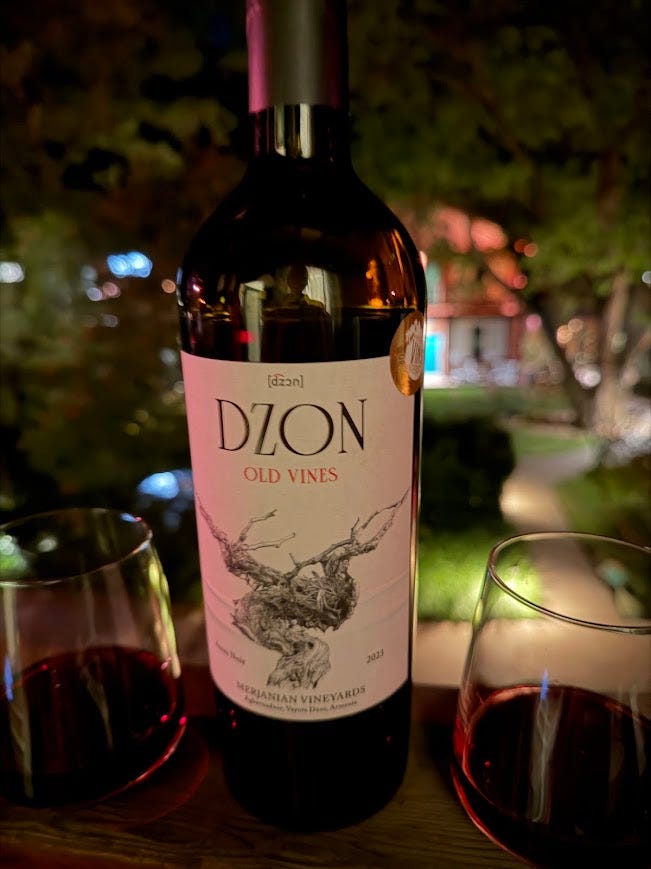
Armenia’s Areni Noir has demonstrable history, promise, and proof. During my time in Yerevan and the surrounding wine regions this year, I tasted dozens of Areni wines. Most were interesting, good wines I’d occasionally put into my wine-drinking rotation, but only a few had me at “holy shit.” This is one of them. And not for the reason you might think. This isn’t a wine I’d say would be considered a “fine wine” in the sense that it’s not particularly elegant, classic, or refined. BUT it is one that is affirmatively distinctive, complex, notably of place, delightful to drink, and a standout for the variety. The grapes are grown at 4,920 feet in the Vayots Dzor (one of Armenia’s premier growing regions) on own-rooted bush vines in a single vineyard. At the hands of this talented young winemaker, Gomidas Merjanian, the grapes make for a dark fruited, savory, peppery, mineral pour that leaves with an echoing finish, calling you back for more. Dzon means “tribute” in Armenian, a nod to both the country’s past and future, and it’s definitively a wine I’ll voluntarily pay tribute to. A victor.
Unavailable in the States, but worth putting on your radar - and if you’re in Armenia, Dzon is certainly worth a visit or purchase at Yerevan’s In Vino (incidentally, where Gomidas got into the wine scene as a bartender).
In the Spotlight
Wine Region of the Week
Did you know that Idaho has three American Viticultural Areas and six wine regions? I didn’t either. In fact, there are more than 65 wineries producing over 1.8 million bottles per year. The first recorded vineyard planting dates back to 1864, and until Prohibition in 1919, the industry was thriving. Of course, that Amendment caused a glitch in things, but thankfully people came back to their senses and put an end to that, and in 1935, the first post-Prohibition winery in Idaho was opened. In 1984, the Idaho Grape Growers & Wine Producers Commission was formed and the Snake River Valley AVA, Idaho’s first, was established in 2007, followed by the Eagle Foothills AVA in 2015, and the Lewis-Clark Valley AVA in 2016. Today, there are 1,300 acres planted to vine across the state.
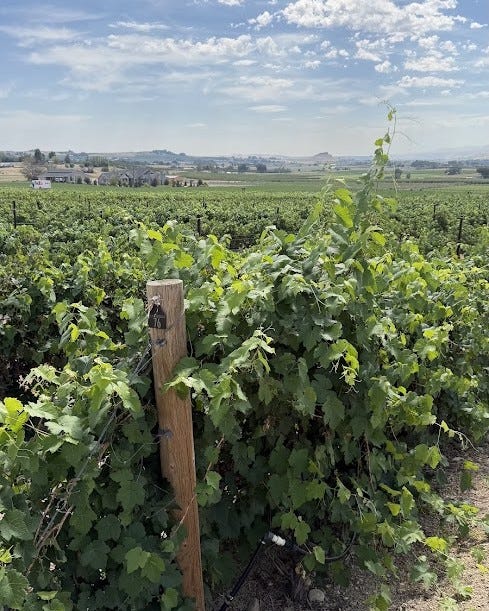
The Snake River Valley AVA accounts for 1,125 of those planted acres and sits in southwest Idaho (as well as two counties in eastern Oregon), and is home to the nested Eagle Foothills AVA, and the Sunnyslope, Western Treasure Valley, Boise, and Garden City wine regions. The AVA sits atop the ancient Lake Idaho, where what was once the lake’s shoreline creates the area’s natural boundaries. The Snake River provides the temperature moderation and water irrigation for the dry, high-desert region, while also creating various microclimates throughout. Elevations range between 2,100 and 3,400 feet, with free-draining soils largely comprised of ancient volcanic sediment, basalt, loess, and loam.
Winery of the Week
Scoria Vineyards sits within the Snake River Valley AVA and is home to the only privately-owned volcanic vent, which sits amidst their vines. The property and winery are owned and operated by husband and wife James and Sydney Nederend. The site was purchased by Sydney’s great-grandparents in 1929, and planted to nine acres of vine by Sydney, at age 21, in 2014. Scoria, named for the sandy soil and large volcanic rock that sits on a parcel of the 250-acre property, sits just west of Lake Lowell in Caldwell, Idaho.


Today, the couple has 26.5 acres planted to Malbec, Petit Verdot, Cabernet Sauvignon, Merlot, Grenache, Syrah, and Mourvèdre and produces around 3,000 cases of wine annually. They operate two tasting rooms, one at the vineyard in Caldwell and another in downtown Boise. Scoria was our third stop in Idaho on my first day ever tasting Idaho wines. About a 45-minute drive from Boise, the Caldwell tasting room doesn’t boast much in the way of views, but the quality of the wines, the absolute gem-of-a-tasting-host, and the fact that it was probably one of the most chic industrial barns I’ve sat in more than made up for that.
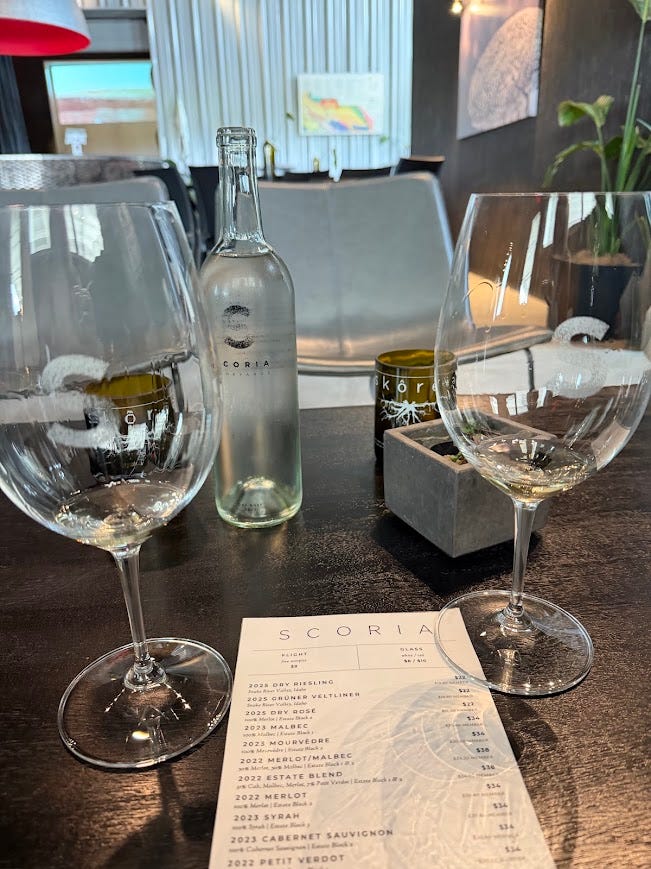
We purchased two tastings, enabling us to share a pour of every wine on the list. Scoria offered two white wines, the only non-estate bottlings, a rosé, and several reds among which the Merlot and Mourvèdre made their way home. I loved the notable aromatics, complexity of flavors, and the smooth mouthfeel of each one of the reds. Of the wineries we visited that day, they demonstrated the most refinement, balance, length, and intensity - and certainly the most minerality. And frankly, it was one of the best Merlots I’ve had in a long time. Of course, to find these wines, you’ll need to head to Idaho, or order online, but if you do find yourself traveling in or around Boise, make the stop.
In the News
In 2015, wildfire expert and historian Stephen J. Pyne coined the term, “Pyrocene,” to suggest that we are currently living in a Fire Age, versus Ice Ages of the past. A decade later, there is no question: we are in an era of mega-wildfires, increasing in both number and size each year. According to the Global Wildfire Information System, more than 277.5 million acres worldwide have been burned this year. And as of this writing, 51,774 fires have burned 8.1 million acres in the United States, with 92 fires currently burning, the largest of which are found in Idaho, Washington, Oregon, and Montana. In 2026, the U.S. is already 126% above the 10-year average in the number of fires, and at 165% for acres burned across that same period.
Of course, these fires aren’t limited to the United States. Last year I wrote about the fires impacting two of my favorite wine regions in France, Languedoc and Roussillon. And this year, wildfires have greatly impacted wine regions around Bordeaux, Bourgogne, the Sierra de Gredos (within Vinos de Madrid DO), Greece, and Australia, to name a few. And again, the data reveals an increasing incidence. Between 2006 and 2025, the average percentage of acres burned annually across Spain and Italy was .19% of the countries’ total land area. As tracked by the European Forest Fire Information System, this year (2026) those percentages currently sit at .58% and .31%, respectively. France has also seen a jump in those same periods from .03% to .18%. For perspective, that .18% burned across France equates to roughly 238,360 acres across a 135.8-million-acre country.
Aside from the tragic loss of life wildfires can cause, they obviously also take a significant economic toll from property losses, firefighting and emergency responses to healthcare costs and productivity loss. They can also destroy natural habitats, watersheds, timber resources, as well as cause human and animal displacement and secondary disasters from mudslides to flooding in previously burned-out areas. In terms of impact on the wine industry, since that’s what we talk about, there’s obviously the risk of property loss, vineyard destruction, and smoke-tainted wines. It’s estimated that the 2020 wildfire smoke in Oregon and California caused roughly $3 to $3.7 billion in total losses for the wine industry. And this year, in Spain’s Sierra de Gredos, producers and growers in the hardest-hit zones are estimating an 80% loss on their grape harvest due to extreme smoke exposure. Just sayin', Mother Nature doesn't negotiate. These mounting and increasingly extreme heatwaves, droughts, and dry winds across many of the world’s wine-producing regions, combined with warming climates that push budbreak back and ripening into the season’s hottest, most fire-prone months, have made wildfires an increasingly present reality.
In Good Conscience
Smoke-tainted vintages and fire-damaged vineyards are just the apex of this flaming cataclysm. Food systems are also being challenged and water scarcity is accelerating. The consequences of climate change are no longer hypothetical. They are here. And to prevent continued loss, mitigate climatic change, and safeguard our vital food, water - and yes, wine - resources, a growing consensus of thought leaders across social, political, and geographic boundaries appears to be pointing towards a more coordinated response, rooted in science, community, and land stewardship.
Earlier this month, I had the opportunity to attend the Western Landowners Alliance field day with Redwing Ranch, “Building Fire Resilient Working Lands.” The session brought together private landowners, public land management representatives, ranchers, home and business owners, and local Firewise USA* program participants for a half-day learning session at Redwing Ranch in Gardner, Colorado.
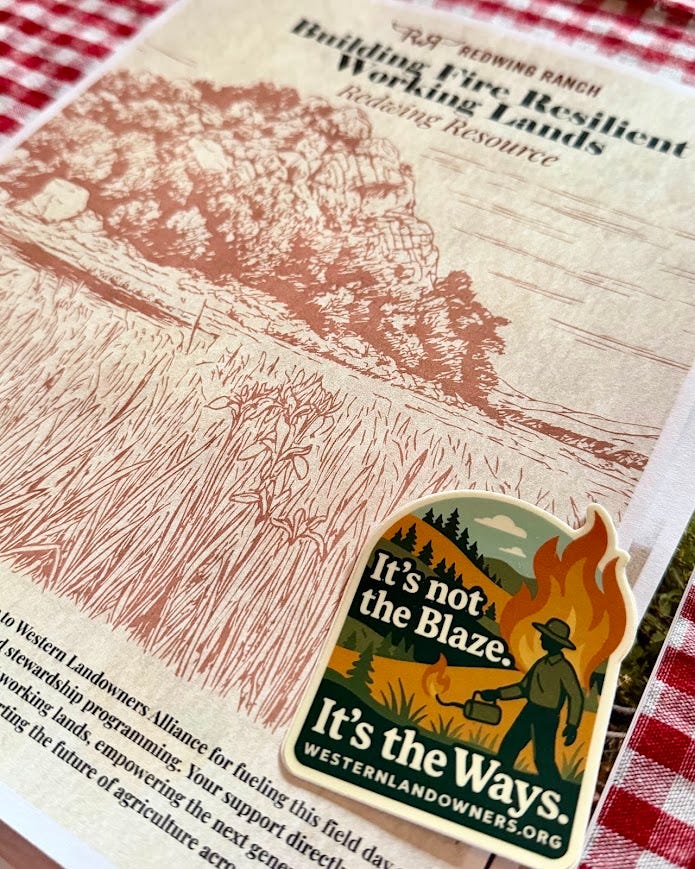
Redwing Ranch is a woman-owned and led, science-backed working cattle ranch sitting on 4,000 acres between 7,200 and 8,600 feet elevation in a vast high desert - only a few hours’ drive southwest of Denver, but 45 minutes to the nearest gas station. Owner and operator, Christy Wyckoff, a PhD wildlife ecologist focused on wildlife conservation and ecological land management, acquired the ranch in 2022, setting out to prove that successful ranching inextricably intertwines profit and planet. The team at Redwing blends adaptive grazing and hands-on learning to restore soils, support wildlife, and create resilience by mimicking nature, and in doing so, they support profitable herds. They then take what they learn and share actionable tools with others through a series of educational events and immersive learning. They also partner with local grazers, universities, non-profits, land managers, and ranchers to build a community of problem solvers, because healthy ecosystems sustain communities. And, based on what I observed, they’ve found a way to create discussion, build consensus, and develop solutions among politically, demographically, and socially different individuals and groups. Why? Life, property, and natural resources - and yes, profit too - are at stake.


This month’s Fire Resilience field day addressed several ways landowners can create better resilience to wildfires as well as the ability to quickly recover in the event of a fire through asset prioritization, incremental implementation, and long-term planning. They also shared and demonstrated many of the actionable steps that landowners can take - a majority of which establish a “healthy disturbance regime” as part of the land management program. For example, a controlled burn creates a healthy disturbance, just as naturally occurring fires can be useful in clearing dead brush and leaves, recycling nutrients back into the soil, and also triggering seed release for native plants, thereby creating a more balanced ecosystem that also helps to prevent larger, dangerous mega-fires. And, to close out the day, the Western Landowners Alliance also shared ideas and resources on how individuals and groups can establish similar networks locally, to work towards a community-driven approach to land management and the future of agriculture - the root of our shared sustainability.
*Firewise USA is administered by NFPA® and is co-sponsored by the USDA Forest Service and the National Association of State Foresters. The national Firewise USA recognition program provides a collaborative framework to help neighbors in a geographic area get organized, find direction, and take action to increase the ignition resistance of their homes and community and to reduce wildfire risks at the local level.
In Context
Climate change has already forced viticulturists to farm differently - non-traditional grape varieties, new aspects/elevations, water management, etc. And similarly, with the possibility of recurring smoke or fire damage, the wine industry will soon be facing more tough choices. And as with any impending changes, the more prepared and ahead of the game, the better the chances to adapt and succeed. Certainly collaborating with other local landowners, grape growers, and farming organizations is a plus because there is no one-size-fits-all approach, and the prescriptions for each region will be different. But what can be done at the individual vineyard level? A few PhD-holding, lasso-throwing female cattle ranchers just might have some answers.
The first step: prioritization. Look at the land as a whole and identify its assets in order of priority: 1. Life, 2. Property, 3. Natural Resources. Next, start somewhere! Begin incremental resiliency and conservation improvements starting with the areas that will impact the top asset - those pertaining to life: homes, tasting rooms, animal barns, etc. And finally, plan for the future - additional adaptations, improvements, changes, and chart them out manageably (and flexibly) over time.


So, what do these conservation improvements look like in practice? At Redwing Ranch, the team focuses on breaking the conformity of the landscape. After completing a fire modeling study on the areas at highest risk during a fire, they realized the home base was in the direct path (“the wick area” - think like a candle) of where the fire would most likely spread, and spread quickly, based on the landscape and its conditions. And so, they began by clearing a lot of those potential fuels - dead trees, debris, etc. - from the potential path, including cleaning and maintaining any ditches in or around the property. They also began creating natural fire breaks to slow or deter potential fire. It’s a slow process, but their work has already altered the original fire model. Now, these changes won’t stop the fires entirely, but they can help to protect the areas of priority, while also improving the soil and natural biodiversity which directly benefits a healthy and profitable herd.
The same methodology can apply to vineyard properties. Upon assessing and prioritizing the site, clearing, cleaning, and maintaining potentially damaging high-fuel areas through chainsaw work, animal grazing, pile burning, etc., can be a crucial incremental step. Water tanks can also be placed strategically throughout the property. Additionally, as they do at the ranch, creating shaded fuel breaks - areas where underbrush and smaller trees are cleared, but a healthy canopy of mature trees is left intact to shade the ground - can also help to slow wildfires by eliminating ladder fuels, preventing horizontal fire spread, and creating shade to keep the ground cooler. Vineyard owners and managers can also consider agroforestry design - the intentional integration of trees and shrubs with crops or livestock to create productive, self-sustaining ecosystems that mimic nature. Agroforestry is a key element to biodiversity in the vineyard (and a capstone of the various types of sustainable viticulture), helping regulate soil moisture, foster resilient underground fungal networks, create a buffer zone of humidity, and establish fire breaks.
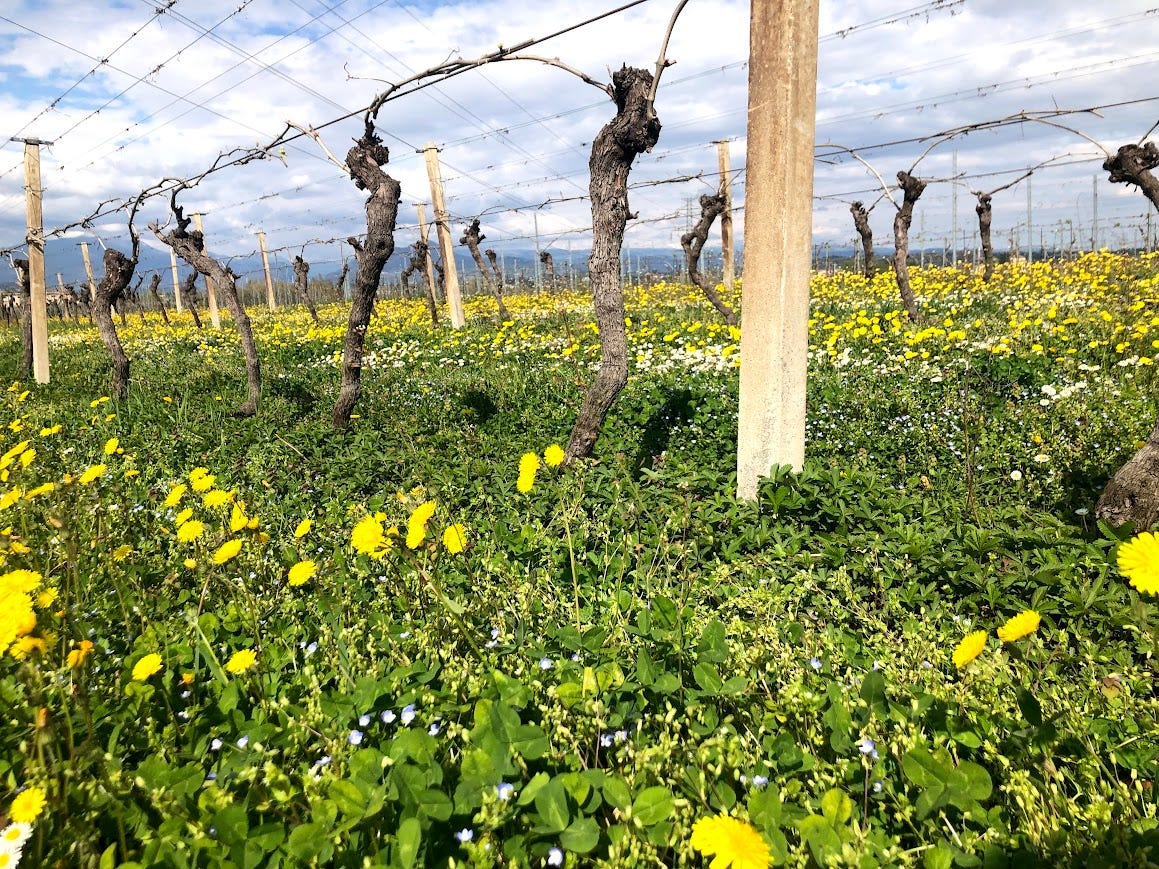
These land management practices were all making sense to me, but as I started to think about various vineyards I’ve worked and walked, I was curious about the organic, biodynamic, and regenerative vineyards that maintain cover crops between rows - another feature of sustainable viticulture. Wouldn’t cover crops create fuel and a bridge for wildfires? Unfortunately, yes. However, and thankfully, there are mitigations worth considering. Flattening, chopping, or mowing down the cover crop earlier in the season, for example, will reduce the height of a potential fuel bed, help to slow grass fires from rising to the fruiting zone and canopy, and establish a flat layer of organic material to help retain soil moisture and create a cooling zone around the roots and trunks at the peak of fire season. Additionally, moving mulch to the perimeter of the vineyard (and away from any infrastructure) can help to create a defensible space and change the course of the fire. A thin layer of non-flammable mulch can break that landscape conformity, reduce fire intensity, and help to retain moisture in the soil.
Now, are any of these actions going to guarantee protection from fires or smoke? Unfortunately, no. Mother Nature’s gonna Mother Nature. However, it can reduce the risk of wildfire or wildfire destruction, maximize the ability to recover quickly, and increase the likelihood that nature and humanity can both thrive. And, as you can imagine, many of these practices require thought and knowledge. For example, a controlled burn can only be done in certain weather conditions and takes an entire team (those on hand for first aid, water supply, working the burn area, etc.), often at a moment’s notice, to undertake. And for the mulching, ensuring the correct amount and type is crucial - too little and it won’t be effective, and too much can literally backfire. And this is why, creating local communities, sharing working knowledge, and collaboration across spectrums and boundaries, is crucial to protecting both natural resources and the life, property, and profitability of mankind. So, my hat’s off to the cowgirls taking the reins at Redwing Ranch for not only proving profitability and conservation are inextricably linked, but also for taking the time to help train, educate, and inspire others both in their community and beyond.
In Practice
I don’t own a vineyard and I’m guessing most of you don’t either. But, we are all a part of a shared community and there are steps we too can take right at home. These “Home Ignition Zone” tips for fire prevention developed by the U.S. Forest Service are beneficial to us all, but especially important if you live in a wildfire-prone region, and require ongoing maintenance:
Zone 1 - Immediate Zone (0-5 feet from the home) - This is the most critical zone. Recommendations include: keeping the roof and gutters clean, repairing loose or missing shingles, placing metal mesh screens over vents, removing flammable materials and dead vegetation near walls, and enclosing areas beneath decks and porches.
Zone 2 - Intermediate Zone (5-30 feet from the home) - This is the buffer zone. Recommendations include: maintaining lawns at a height of four inches or less, pruning trees 6-10 feet above the ground, spacing trees at least 18’ apart, and creating landscape breaks with sidewalks, driveways, patios, or gravel areas.
Zone 3 - Extended Zone (30-100 feet from the home) - This is the first zone of defense. Recommendations include: removing dead trees and shrubs, thinning small trees between mature trees, ensuring defensible spaces around outbuildings (sheds/garages/etc.), and maintaining 6-12 feet spacing between tree canopies.


Lastly, and of course, most importantly, make sure first responders have clear access to the property in case of an emergency. If you’re curious, the U.S. Forest Service mapping tool can provide a picture of your property’s wildfire risk.
In Brief
Well-managed vineyards can actually serve as defensive shields and fire breaks. Vines are more succulent than many plants with a high water content, making them less flammable than drier grasses, shrubs, and trees. However, wildfires in a vineyard - especially those with overgrown cover crops, unmanaged weeds, or flammable mulch - still cause extensive damage, requiring years of recovery. But, fires around vineyards, even those not within close proximity, can also be damaging, albeit in a much more silent and insidious way: Smoke Taint.
Burning wood releases airborne compounds called volatile phenols into the air. These phenols are absorbed into grape skins where they bind with sugars, forming odorless molecules called glycosides. Grapes are at their most vulnerable between veraison** and harvest. And here’s the tricky part - grapes impacted by smoke taint will smell and taste clean at this stage. Unfortunately, it’s during fermentation, and sometimes not even until consumption, that the smoke taint makes itself known. Both fermentation and saliva break open the bonds between the volatile phenols and sugars, releasing the smoke taint. Significant amounts can be detected in the cellar post-fermentation, but traces may not release until years later in the bottle. Wines that tasted clean upon release can later reveal their smoke taint when opened and drunk down the road. Currently there are no foolproof remedies for grape growers and winemakers to prevent or eliminate smoke taint, but oenology labs can now detect smoke taint in samples of both grapes and grape juice in advance of harvest. Of course this can help to guide harvesting and winemaking decisions, potentially sparing unnecessary costs and headaches; however, it also can mean loss of crop and a final product.
How can you recognize smoke taint? The worst of it is truly noticeable and frankly, unforgettable. I still crinkle my nose at the thought of that ashtray-laden Pinot. Smoke taint can impart a range of aromas and flavors in wine. Some of the more common characteristics include: campfire, liquid smoke, burnt wood, plastic, wet cigar, or a used ashtray. The affected wines can also leave a distinct, persistent, and unpleasant smoky or bitter finish that coats the mouth.
**Veraison is the time in the grape’s growth cycle when the skins begin transitioning from green to either gold or red/black, marking the onset of ripening.
In Gratitude
A brief, and insufficient, note of thanks to all of the firefighters and first responders worldwide. What they do is not easy, is dangerous, and truly deserves our gratitude.
In Box
Asked: Are screw caps for cheap wines?
Answered: Screw caps are not an indication of quality when it comes to wine. Rather, they are used to ensure consistent quality and to eliminate the possibility of cork contamination (aka cork taint or TCA***), a significant expense and loss for winemakers and consumers alike. They also create a near-airtight closure, significantly reducing the amount of oxygen that seeps into the bottle over time. That said, there is technology that now allows winemakers to choose screw caps with specific, engineered liners that let in tiny, specific amounts of oxygen over time if it’s desirable for aging. Screw caps will most typically (although not always) be found on younger, ready-to-drink wines that don’t require or benefit from significant aging - think crisp white wines, rosé wines, or chillable reds. Plus, screw caps are far more convenient for those spur-of-the-moment bottles when there’s no wine opener in sight, or for a quick glass before sealing the bottle back up, like on a picnic or a hike. Just sayin’.
***TCA stands for 2,4,6-trichloroanisole that causes "cork taint," a common wine fault often referred to as “corked.” TCA forms when harmless fungi or mold react with chlorine-based products. It most commonly comes from corks, but it can also come from contaminated wooden barrels, pallets, cardboard boxes, or wooden beams that have been exposed to chlorine. And surprisingly, though rare, even screw-cap wines can be corked if they come in contact with contaminated equipment. TCA is harmless to your health, but it can ruin a wine. In significant amounts, it can make a wine smell moldy or musty, sometimes even like wet dog, damp cement, or wet newspapers/cardboard, and render the wine undrinkable. At lower levels, unnoticed to some, TCA makes a normally rich, fruity wine taste dull or muted.
In the Know


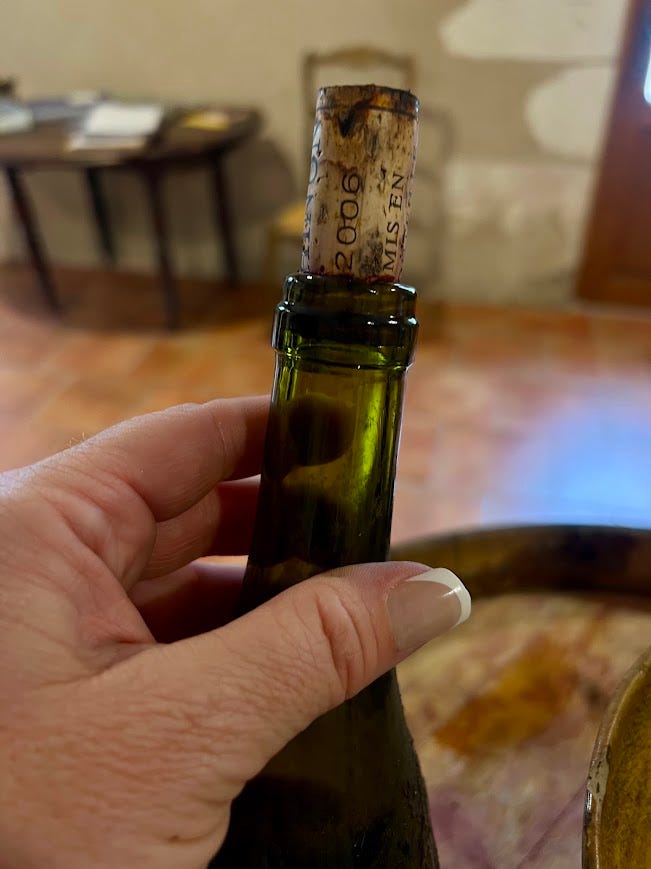
It’s a common misperception that screw caps are more sustainable than corks. Corks are a natural product, and so it makes sense that many people think moving away from them would be more beneficial to the environment, in the same way going paperless is good for the trees. However, the opposite is actually true. Natural cork is generally more sustainable than aluminum screw caps because cork is a renewable, biodegradable, and carbon-negative material. And thank goodness, because I do love the romance of a cork. Now, I’m not saying to avoid those screw-cap wines - you’d be missing out on some solid selections - but here are a few fun facts on the poppable closures to dazzle friends with at the next wine night:
Cork oak forests cover around 1.8 million acres of Portugal. Harvesting the cork does not harm the tree, which must grow for roughly 25 years prior to harvest.
Cork is harvested by hand every nine to 10 years. A cork tree can live up to 200 years, meaning it can be harvested between 15 to 18 times in its lifecycle.
Cork oak forests act as massive “carbon sinks,” absorbing far more carbon dioxide from the atmosphere than they release - meaning wines bottled with cork can actually have a negative carbon footprint.
Cork forests also act as a barrier against fires, protect soils, and promote biodiversity.
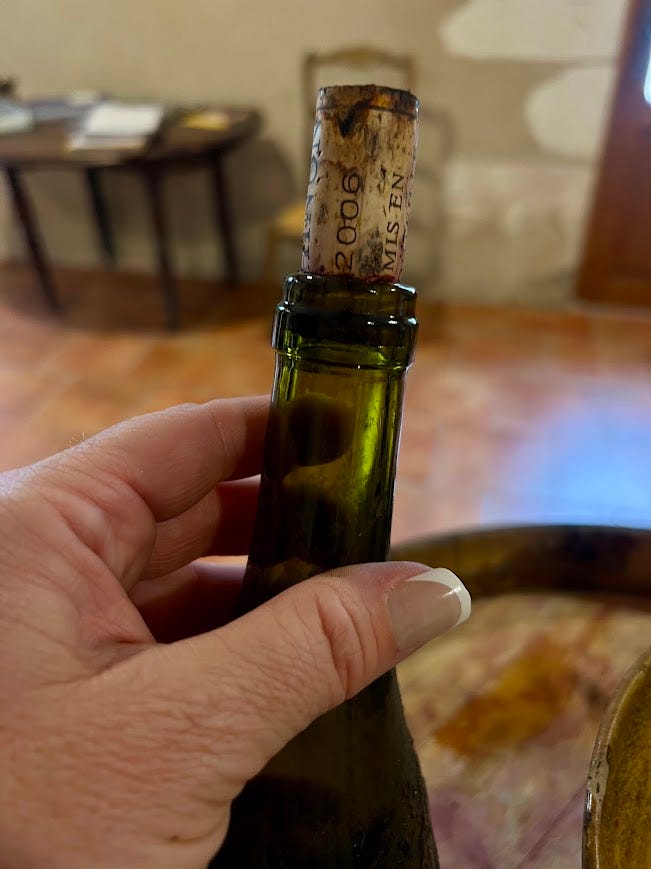
Around 13 billion corks are produced each year.
Cork is biodegradable and sustainable, breaking down naturally in the environment after use.
Technical corks - made from ground natural cork vs. a single piece of cork, and not to be confused with synthetic corks made of plastic - have reduced the incidence of cork taint significantly.
Shoes, drills, keys, hammers/nails, bike pumps, a pocket knife, and the good old-fashioned push-down method are all ways in which people have removed a cork from a bottle. Where there’s a will…
In the Hopper
I have a never-ending list of topics and stories to come. We’re not yet done with Italy (Montefalco and Campania) or Armenia, and there’s now more Italy on the way! Of course, I have lots more of Spain and Willamette Valley to delve into as well.
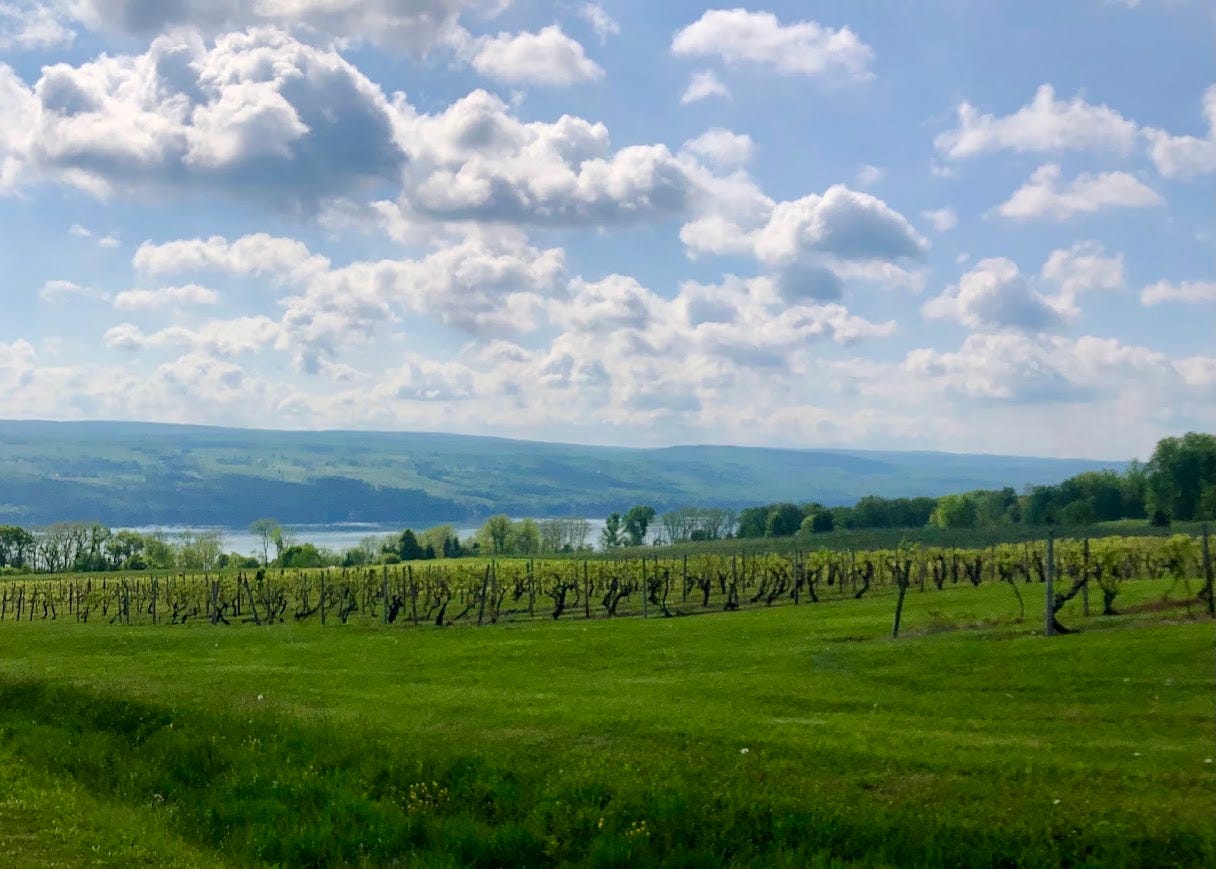
Plus this week, tonight, in fact, I’ll be on my way to my favorite domestic wine region. My home away from home. Stay tuned - there’s a new guide in the works!
This is why real storytelling in wine matters so much. You’ve painted such a vivid, intense picture of the emotional rollercoaster vignerons face when fire and extreme climate conditions threaten a whole year's hard labor in a matter of hours.
Can't wait to hear more on Italy!! I so want to go back soon!
Many years ago I bought Lars the book To Cork or Not to Cork. It was a very fascinating and technical read about cork vs screwcap wine and the decisions to make.